



 Accommodation
Find a place to stay
Accommodation
Find a place to stay Houseboats
Discover the Murray in style
Houseboats
Discover the Murray in style River Cruises
Enjoy the beauty up close
River Cruises
Enjoy the beauty up close Visitor Information
 Centers
Visitor Information
Visitor Information Centers


 Song Sung Blue. The Neil Diamond Experience featuring Troy Harrison. A Story in Every Song.
06 Mar 2026 - Renmark
 Ireland The Voyage
24 Feb 2026 - Renmark
 Cirque Nouvelle
14 Apr 2026 - Renmark
 Kevin Bloody Wilson Aussie Icon Tour with special guest Jenny Talia
27 Mar 2026 - Renmark
 The Australian Beach Boys Show
03 May 2026 - Renmark
Aboriginal canoe trees around found along the Murray River
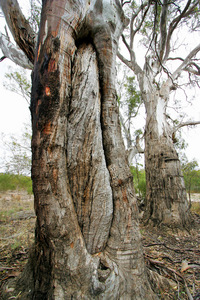
The explorer Edward J. Eyre, Protector of the Aborigines 1841-44 at Moorundie, near Blanchetown, described one canoe as formed from a single piece of bark 4.5m long 0.9m wide and about 20cm deep. The bow was pointed, slightly more than the stern and the craft had a flat bottom. Construction was seemingly simple, but required patience and much skill. Bark was removed from river red gums only during summer, when the sap ran freely. First the required size and shape of the canoe was cut, with a digging stick, through the bark to the hardwood core. The bark was then slowly prised from the tree by the use of numerous smaller sticks.
The whole slab was held in position by forked branches or hand-woven rope. When finally separated from the tree the slab was lowered to the ground. Flat on the ground, small fires were lit on the moist inside of the bark, which evaporated the sap and made the bark curl upwards. The ends were then pulled together and stitched with hemp and plugged with mud. Stretchers were inserted to hold the open shape. After tying it was allowed to mature when it was constantly rubbed with grease and ochre. Such a craft had a life of about two years.
There are examples of such canoes in the Adelaide and Melbourne museums.

Learn more about Indigenous Australians
- Welcome to Country
- Visit Mungo National Park
- Ngarrindjeri Dreamtime Story of Ponde and Ngurunderi
- Nildottie - Evidence of Indigenous Australians over 5,000 years ago
- Aboriginal Canoe Trees
- Murray River Aborigines (North-Western Victoria)
- Bunyips have their origins in the folklore of the Aborigines
- Take a tour with Paakantji traditional owner at Mungo
- National Landscapes
 Back | Home | Top
Tell your friends you found this at murrayriver.com.au!
Copyright Discover Murray 2026. This site or any portion of this site must not be reproduced, duplicated, copied, sold, resold, or otherwise exploited for any commercial purpose that is not expressly permitted by DISCOVER MURRAY.