



 Accommodation
Find a place to stay
Accommodation
Find a place to stay Houseboats
Discover the Murray in style
Houseboats
Discover the Murray in style River Cruises
Enjoy the beauty up close
River Cruises
Enjoy the beauty up close Visitor Information
 Centers
Visitor Information
Visitor Information Centers


 Cirque Nouvelle
14 Apr 2026 - Renmark
 The Italian Tenors
09 Apr 2026 - Renmark
 The Australian Beach Boys Show
03 May 2026 - Renmark
 Song Sung Blue. The Neil Diamond Experience featuring Troy Harrison. A Story in Every Song.
06 Mar 2026 - Renmark
 Lewis Major: Triptych
14 Mar 2026 - Renmark
Murray River National Parks and Reserves
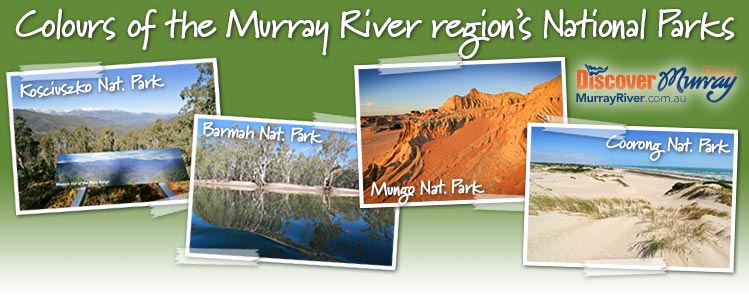
Iconic National Parks of the Murray River region - Victoria, NSW and South Australia
Nowhere in Australia will you get the extreme diversity of National Parks than along the Murray River.
From the snow, outback to the ocean
- Kosciuszko National Park (NSW)
- Burrowa-Pine Mountain National Park (VIC)
- Murray River Reserves (VIC/NSW)
- Barmah National Park (VIC)
- Gunbower National Park (VIC)
- Nyah-Vinifera Park (VIC)
- River Red Gum National Parks (VIC/NSW)
- Murray Valley National and Regional Parks (NSW)
- Hattah-Kulkyne National Park (VIC)
- Yanga National Park (NSW) (Murrumbidgee River near the Murray River)
- Murray-Sunset National Park (VIC)
- Mungo National Park (NSW)
- Murray River National Park (SA)
- Coorong National Park (SA)
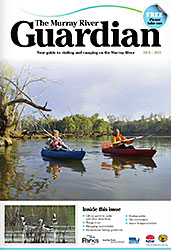 The Murray River Guardian
The Murray River Guardian aims to provide campers with a 'one-stop-shop' on safe and sustainable camping as well as highlight key environmental projects and tourism information from Corowa to Mildura.
The paper is hand delivered by Rangers on patrol, and is also available from local visitor information centres, petrol stations, bait shops etc, and across the borders in New South Wales, Victoria and South Australia.
The Murray River Guardian is available online as a digital in flip book for you to enjoy and appreciate visiting and camping on the Murray River in Victoria and New South Wales.
Discover Murray River Trail and National Parks
Follow the Discover Murray River Trail starting at the source near Australia’s highest peak, Mt Kosciuszko heading west towards the world’s largest River Red Gum forests at Barmah near Echuca and towards the semi-arid landscape of Mildura, Balranald and Wentworth you’ll discover the World Heritage Willandra Lakes and Mungo National Park and Murray Sunset National Park.
As you head into South Australia you’ll discover the biosphere of the Riverland and the Murray River National Park before making your way south to the Coorong National Park.
You’ll also encounter a myriad of reserves, state and conservation parks and billabongs. From snow to desert to ocean, the Murray River has spectacular serenity and beauty. We’re proud just to be sharing it with you. Enjoy and please remember to protect our river environment and National Park care.
Murray River Icon Sites
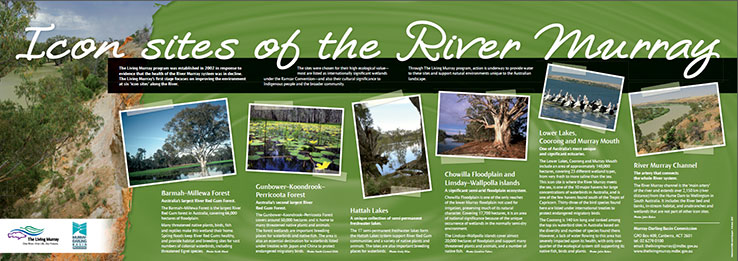
Separate to the National Parks, however highly aligned, is the Living Murray initiative that focuses on improving the environment at six 'icon sites' along the Murray River. The Living Murray icon sites were chosen for their high ecological value - most are listed as internationally significant wetlands under the Ramsar Convention - also for their cultural significance to Indigenous people and the broader community.
- Barmah-Millewa Forest
- Gunbower-Koondrook-Perricoota Forest
- Hattah Lakes
- Chowilla Floodplain and Lindsay-Wallpolla Islands
- Lower Lakes, Coorong and Murray Mouth
- Murray River Channel
Murray River National Parks Care
Related:

Tell your friends you found this at murrayriver.com.au!
Copyright Discover Murray 2026. This site or any portion of this site must not be reproduced, duplicated, copied, sold, resold, or otherwise exploited for any commercial purpose that is not expressly permitted by DISCOVER MURRAY.